
Our Support Line:
0303 003 6464
Learning outcomes
After completing this unit you will:
- Be aware of how pregnancy loss can affect women in different ways
- Appreciate the different behaviours that women may display; each woman, each pregnancy and each loss is unique
- Understand the importance of acknowledging women’s feelings and emotional state
What does a pregnancy loss mean?
- From a medical perspective, pregnancy loss is a common, and generally a minor, complication of pregnancy, but for women going through it, it can be distressing, frightening and lonely.
- For most women, pregnancy loss means the loss of a baby, whatever the gestation. The majority of women would want you to recognise and understand the emotional impact of their loss by showing empathy and acceptance of whatever they are feeling.
- Some women may face additional complications for their future health or fertility, e.g. after ectopic or molar pregnancy or after assisted conception.
Sometimes just having someone listen to how you feel, the guilt and the heartbreak, helps to ease it.
The human aspects of care
- Everyone experiencing pregnancy loss wants good medical care based on up-to-date knowledge of miscarriage, ectopic or molar pregnancy. The human aspects of care are equally important. Kindness, understanding, clear information and sensitive language are just some of the ways that doctors, nurses, midwives, paramedics, ambulance staff and sonographers can help people cope with their experience.
- The NICE guidance on the diagnosis and management of early pregnancy loss stresses the need for health professionals to be trained in providing supportive and sensitive care, breaking bad news and giving clear information.
- The professional guidance set out in the NMC Code and GMC Good Practice Guide highlights the importance of effective communication and information-giving, balancing this alongside compassionate and effective care. The HCPC standards of conduct also provide guidance on communication.
Emotions associated with pregnancy loss
- Early pregnancy problems can carry a whole range of emotions, some of which you may not have considered or may find surprising. Those emotions are likely to reflect each individual woman’s circumstances and the meaning and significance of this particular pregnancy.
- The positive pregnancy test may have been hoped for or a shock, good news or bad, or there may be a mix of emotions. The pregnancy may be planned or unplanned, wanted or unwanted, but that might not affect the level of attachment or feelings about a loss. It is crucial to guard against making assumptions.
- Everyone reacts individually to pregnancy loss and there is no ‘right’ way to feel. However, many if not most women are very distressed and anxious and see this as an emergency needing urgent help and advice from health professionals. They can find it very difficult to cope with uncertainty if scans or tests need repeating over time.

Reactions to pregnancy loss
Women can react in different ways to the diagnosis of miscarriage, ectopic or molar pregnancy.
Here are 12 words that describe the reactions that people may have to a pregnancy loss. First, click on the six words that are, in your experience, the most common reactions.
-
Shock
Shock
Particularly common at a routine scan when the diagnosis is completely unexpected; or if an apparent miscarriage is later diagnosed as a molar pregnancy; or if the woman diagnosed with an ectopic pregnancy didn’t even know that she was pregnant. The physical process of loss in any trimester can also be shocking.
-
Denial
Denial
She has had no pain or bleeding and feels all the normal pregnancy symptoms – she thinks you must be wrong. This may be a reaction with a missed or silent miscarriage.
-
Confusion
Confusion
She knows she was pregnant, so if there’s just an empty sac, where has the baby gone? If the pregnancy is much smaller than expected or if it is a pregnancy of unknown location, how does this make sense?
-
Fear
Fear
Very few women will have heard of molar pregnancy and will almost certainly Google it if it is suspected. Seeing the words ‘cancer’, or ‘trophoblastic disease’ can be very frightening.
The symptoms and diagnosis of ectopic pregnancy, especially if requiring immediate treatment, can also be very frightening.
-
Tears
Tears
She was expecting a baby and now it’s gone, along with all the hopes, dreams and plans she had for it.
-
Devastation
Devastation
This is a devastating blow and a life-changing event. Perhaps this was a pregnancy after fertility treatment or the last chance to have a baby.
-
Self-blame
Self-blame
She assumes it must be her fault – something that she did or didn’t do; or perhaps due to not really wanting this pregnancy.
-
Anger
Anger
If she had been seen earlier or had been offered certain treatment, this would not have happened. Or, she wants to be referred for investigations but this is not being offered. Perhaps she is sure you are wrong and wants to talk with someone more senior.
-
Withdrawal
Withdrawal
Unable or unwilling to communicate. She does not want to discuss or hear anything. It is important to recognise that this is not the right time to discuss things further and it is better to let her go home with written information and contact numbers for when she is ready.
-
Acceptance
Acceptance
These things happen and it’s a disappointing set-back, but not a disaster. Or, maybe she’s not someone who expresses her feelings in public – for personal or cultural reasons.
-
Anxiety
Anxiety
About the physical process to come and what she might see; about it happening again; about future fertility, perhaps especially after ectopic pregnancy; about her future health in some cases.
-
Seeking explanations
Seeking explanations
She needs to understand why it happened and especially to know what can be done to avoid it happening again.
-
Relief
Relief
This wasn’t a planned or wanted pregnancy – perhaps she’d considered having a termination – so it’s made things easier. Or, she’d rather miscarry now than have a baby with an abnormality. Perhaps it’s a relief to have a final diagnosis after weeks of uncertainty.
Reflection: reactions to pregnancy loss
Think about the reactions that you have explored just now.
- Are any of these reactions that you might not have thought of?
- Are there other reactions that you could add from your experience of working with women experiencing pregnancy loss?
Experiences of miscarriage
Miscarriage can be a devastating experience. For some women it is a great sadness; others are upset at the time but can recover quickly. Miscarriage is not like grieving for someone you knew. Instead women might mourn the loss of their baby’s future and their own future as that baby’s parent.
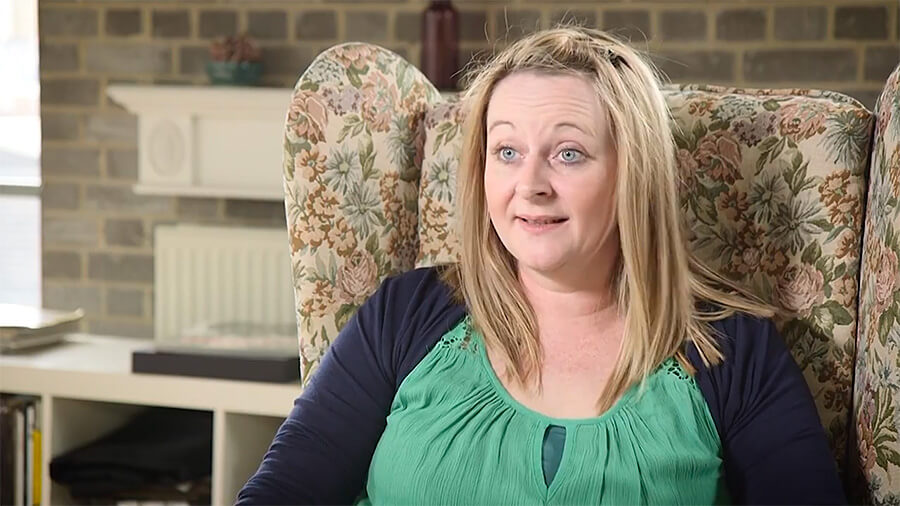
In this film clip you can listen to the experiences of two women, Catherine and Emily, who have experienced miscarriage in different ways. They each explain the impact that the experience has had on them.
Reflection: acknowledging women’s reactions
- Think about the issues Emily and Catherine raised about uncertainty, the importance of empathy, and of providing information.
- What have they made you think about your own practice and how you could help support women experiencing pregnancy loss?
- How can you help women who are having to make difficult decisions?
Ways you can help
Miscarriage is never easy – for those experiencing the loss or for the staff who are looking after them. You may not get it right for everyone, but women will always remember your care, kindness and compassion.
You might not be able to meet all a woman’s expectations but good listening, respect and acknowledging her feelings can help.
Providing clear information can help to reduce distress and uncertainty and enable some sense of control.
It can help if you:
- acknowledge the woman’s emotional response, whatever it is
- show empathy. Most women will appreciate a simple ‘I’m sorry for your loss’ or ‘I’m sorry to say…”
- are prepared to repeat information or explanations: shock can make it hard for people to digest what is being said
- don’t assume that the shorter the gestation, the less the sense of loss
- recognise that uncertainty is difficult to cope with and acknowledge how hard it is to wait for a scan, or a specialist appointment, or test results
I cannot fault the care I received last week. At no point was I unsure of what was going on and nor was I given false hope (which would have done more emotional harm).
The nurses were incredibly sympathetic and caring with their words, their tone and their time.
Pregnancy loss in different settings and stages
Health professionals who care for women in different settings and at different stages of pregnancy may notice some common reactions in those instances.
Click on the folders below to see what pregnancy loss might mean to the woman at different stages of her journey.
Ambulance call out
Ambulance call out
- The woman may be highly anxious, hoping that something can be done to save her baby if you can get her to hospital soon enough.
- If she is bleeding heavily, in considerable pain and/or in and out of consciousness, she may also be very frightened for herself.
- In both cases, she may need reassurance that you will do your best to get her to hospital as soon as you can, but it’s important not to give false hope as to the outcome.
- She may be embarrassed if she is bleeding heavily and visibly. Reassuring her and taking practical steps to maintain her dignity and respect can help.
- She may be very distressed and tearful if the loss has already happened or happens during the journey. Even if you mean to reduce her distress, don’t attempt to cheer her up or say anything that might downplay her feelings. Showing empathy and kindness will be much more valuable.
- If she has miscarried at home or does so in the ambulance, treat the tissue/remains sensitively and place them in a suitable container (see here).
The paramedics were wonderful. They called my husband, asked if there was anyone else I needed contacting… and they gave me some gas and air, which I needed.
At an ultrasound scan
At an ultrasound scan
Women come to their ultrasound scan with a range of expectations, concerns and emotions. A woman may feel:
- positive, looking forward to seeing her baby
- anxious – perhaps extremely anxious:
- due to pain, bleeding or spotting, or because of the lack of pregnancy symptoms
- due to previous experience of loss
- if attending for a further visit after an inconclusive scan
- distressed, if certain that the loss is occurring or has occurred:
- due to heavy bleeding or a negative pregnancy test
- after expectant or medical management
- tense or angry because of barriers she has encountered in reaching this point:
- delays between seeking help and the actual appointment
- the waiting room experience, especially if she is anticipating or has had a loss and others are visibly pregnant
- expecting bad news and resigned to it, due to previous loss/es.
In the scan room, I had expected to see our baby kicking and waving furiously. Instead, nothing. I felt stunned.
General practice
General practice
Women may come to their general practice at any stage of their pregnancy. In relation to pregnancy loss, the woman may be:
- following pregnancy loss:
- shocked, distressed, grieving and possibly self-blaming
- struggling with anxiety, depression, flashbacks or other mental health problems
- anxious about trying again and/or future fertility
- newly pregnant and anxious to have an early scan:
- on medical advice after a previous ectopic or molar pregnancy
- due to a previous loss/es, especially if the diagnosis was unexpected or delayed
- anxious at any time in pregnancy:
- if she has worrying symptoms – or loss or lack of symptoms
- if she is pregnant after loss, with or without specific signs or symptoms. It is common for pregnancy after loss to be a time of high anxiety, which can last until delivery and sometimes beyond.
My GP was fabulous. She knew what we’d been through to get pregnant at all and was so supportive.
Accident and emergency
Accident and emergency
- Whatever the woman’s situation, she is likely to be distressed and anxious and see her case as an emergency requiring urgent intervention.
- She may think, or hope, that swift treatment can save her pregnancy.
- She may feel that the longer she has to wait, the less chance there is of a positive outcome.
- She may be very distressed and tearful and find it hard to wait in a noisy, crowded waiting area.
- She is likely to be embarrassed if she is bleeding heavily.
- She may be in pain – possibly severe pain.
- Even if you mean to reduce her distress, try not to make light of her feelings or offer false reassurance.
- Do your best to maximise her privacy, however difficult that can be in A&E.
I didn’t like being left to sit in the waiting room, covered in blood from the bottom down.
Gynaecology or maternity unit (clinic, ward or theatre)
Gynaecology or maternity unit (clinic, ward or theatre)
Depending on the setting, a woman who is miscarrying may feel out of place and find it very distressing to be:
- With other women who are further along in their pregnancies, especially in an outpatient clinic
- With other women who are having terminations
- Within earshot of women labouring or of the sounds of newborns
Women in their second trimester may be very distressed at having to go through labour and delivery; but they might also find comfort in being cared for by the maternity team.
Theatre staff should be sensitive to the likely emotional impact of surgical management of miscarriage. Clinically it is a routine and straightforward procedure, but it can cause considerable distress to the woman. It will help her if you show kindness and compassion.
Thank you to the lady who took her time to explain everything on the screen to me and acknowledged my loss.